

CONCRETE POLISHING
Concrete Polishing Services
✓ NC License #82081 ✓ Fully insured ✓ ISNetworld · Avetta · MSHA
Our Clients Include





Protect and enhance your concrete floor, no coatings required
Most commercial concrete flooring spends its life dull, gray, and working hard with nothing to show for it. But that same slab, ground and refined, can become a polished floor that's bright, easy to clean, and tougher than almost anything you'd put on top of it. The difference isn't the coating. It's the process of maximizing the concrete itself.
That's what makes polishing different from every other floor treatment. We leverage and refine the floor you already have, repairing cracks, filling joints, and smoothing uneven spots along the way.
What are the practical benefits of concrete polishing?

Polished concrete earns its reputation on looks, but the practical wins are where the real value lies.
The big one is dust. Bare concrete sheds a fine powder as it wears, the "dusting" that coats everything in a warehouse and works its way into equipment and product. Polishing seals the concrete's pores and stops it at the source, which means a cleaner space and less dust where it doesn't belong. On top of that, a polished floor reflects light, brightening dim warehouse and retail spaces without adding a fixture, and it has no trouble handling ongoing foot traffic and cleaning.
You've almost certainly walked on it without noticing, in stadiums, big-box stores, hotels, hospitals, and government buildings. It works in all of them for the same reasons: it lasts, it cleans easily, and it costs less than most of the alternatives.
Why choose polished concrete?
Low maintenance, no wax. A polished floor keeps its look with routine cleaning and never needs waxing or stripping.
Built to last. Polished concrete is highly durable and wears well for years under heavy traffic.
Dust control. Sealing the surface stops bare concrete from dusting, for a cleaner space and better-protected equipment.
Light reflectivity. A polished surface bounces light around the room, brightening dark spaces on its own.
Sustainable by nature. Polishing refines what's already on your floor instead of adding petroleum-based coatings, carpet, or composites, which is why it can contribute toward LEED credits.
Adjustable shine. Finished anywhere from a low satin sheen for easy upkeep to a near-mirror gloss for high-impact spaces.
Why facility managers trust Custom Coatings
35+ years refining commercial floors
Across the Carolinas. Polishing is a craft of grinding in the right stages, and experience is what separates a great floor from a blotchy one.
We repair as we go
Cracks, joints, and uneven areas get addressed during the process, not left under the shine.
We set honest expectations
Polished concrete is beautiful, but it's also unique to your slab, and we'll show you what to expect before we start rather than promise a look we can't guarantee.
We tell you when it's not the right fit
If you need an exact, uniform appearance or a floor that handles constant wet conditions, we'll say so, and point you to a better option.
Project example
View a recent concrete polishing project
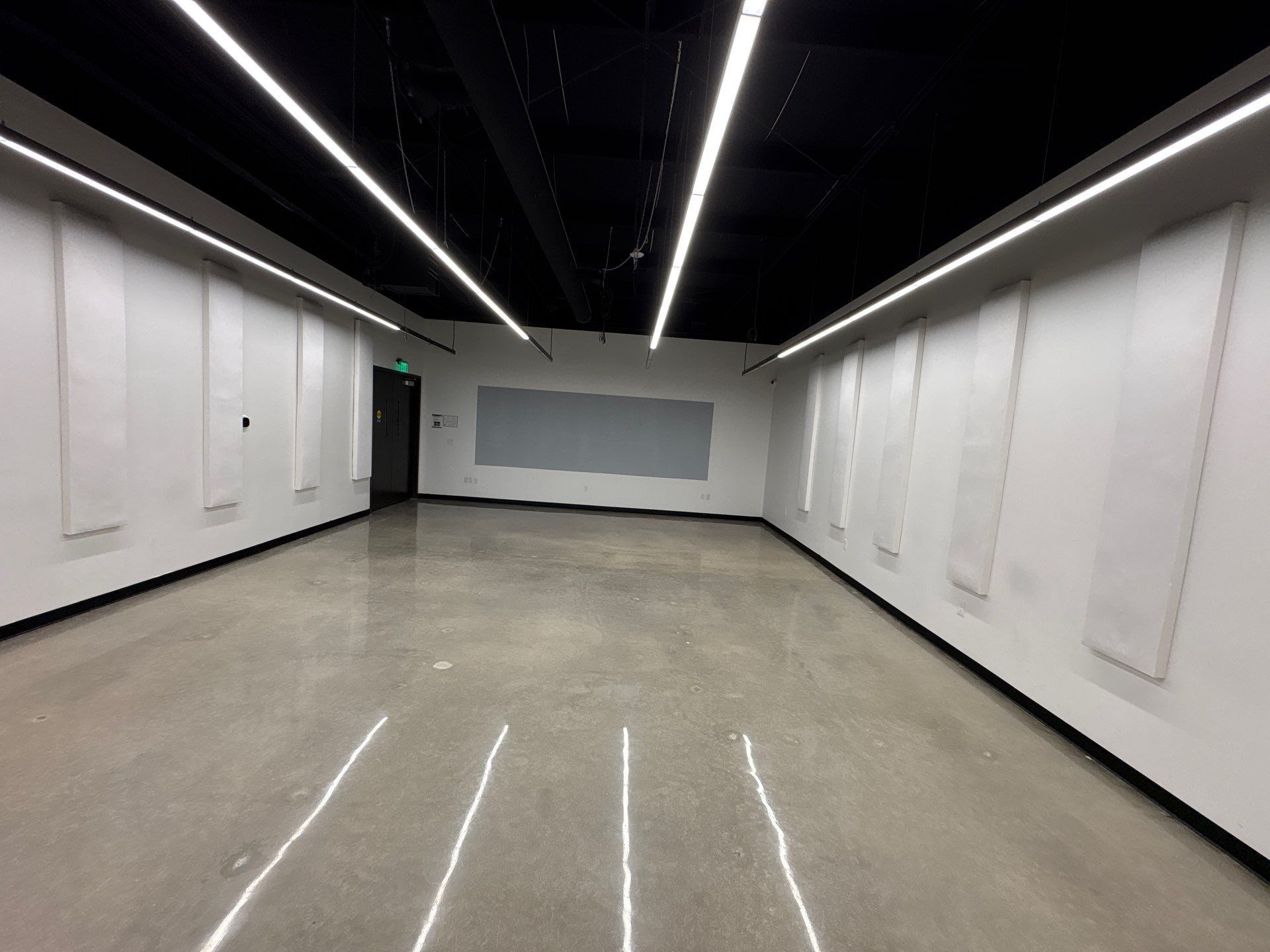
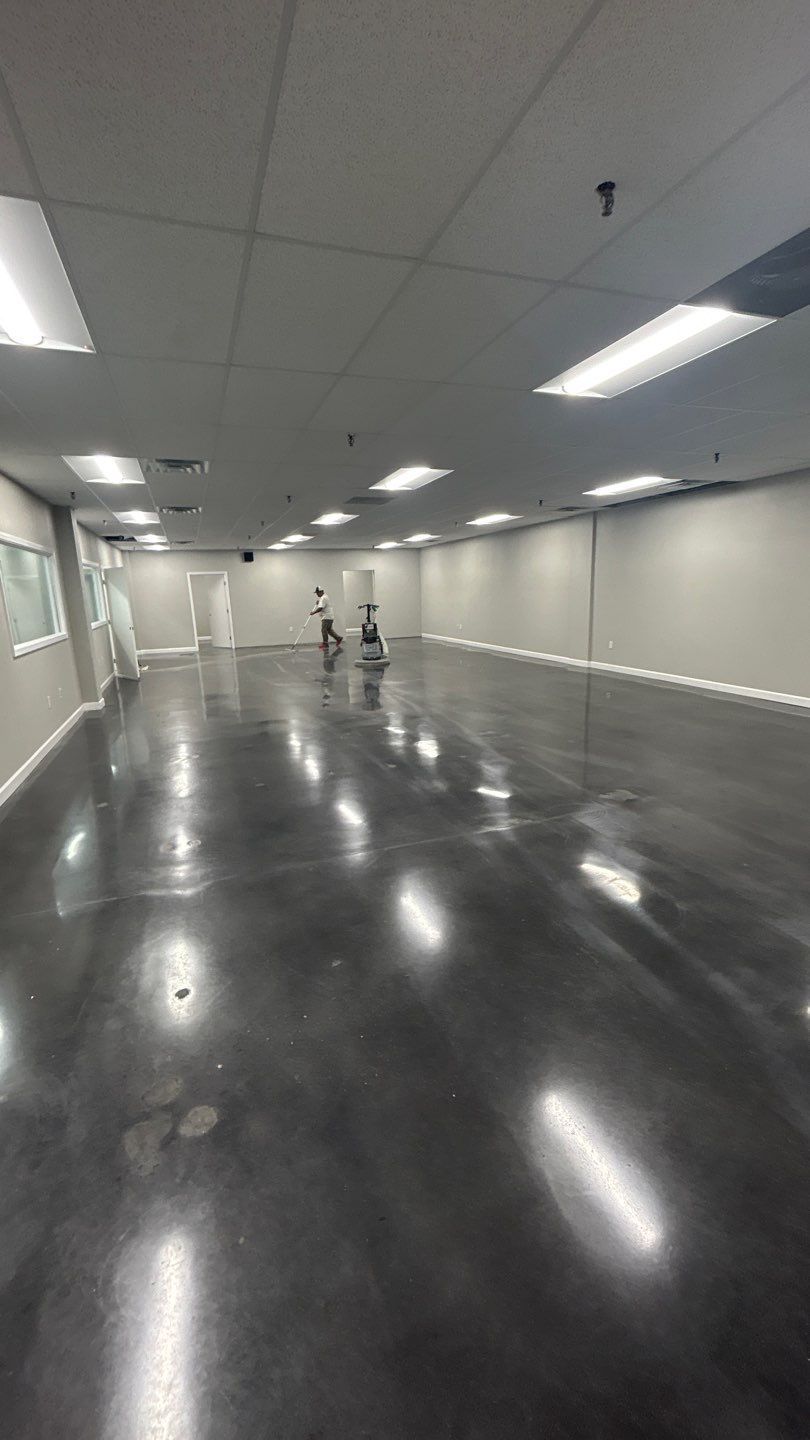
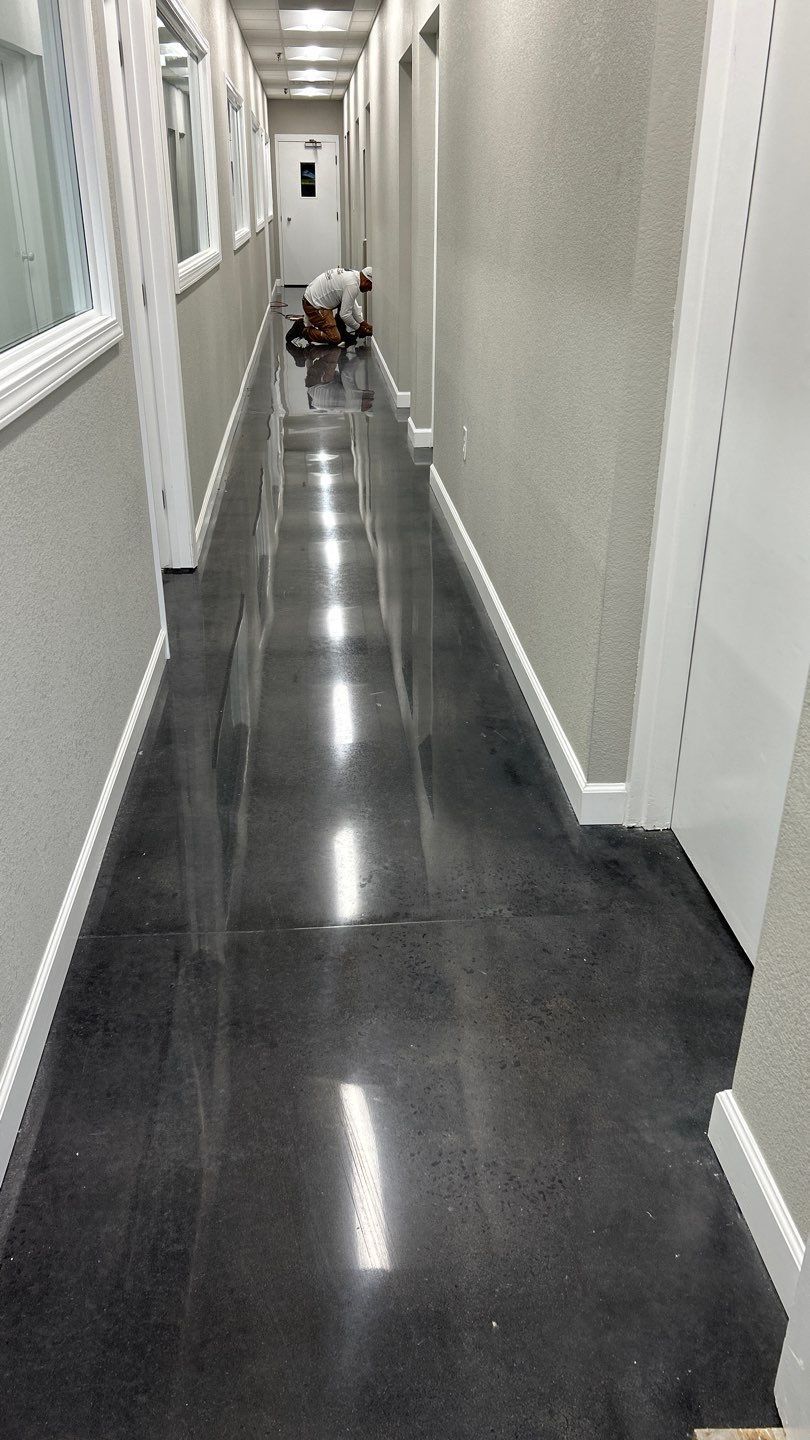
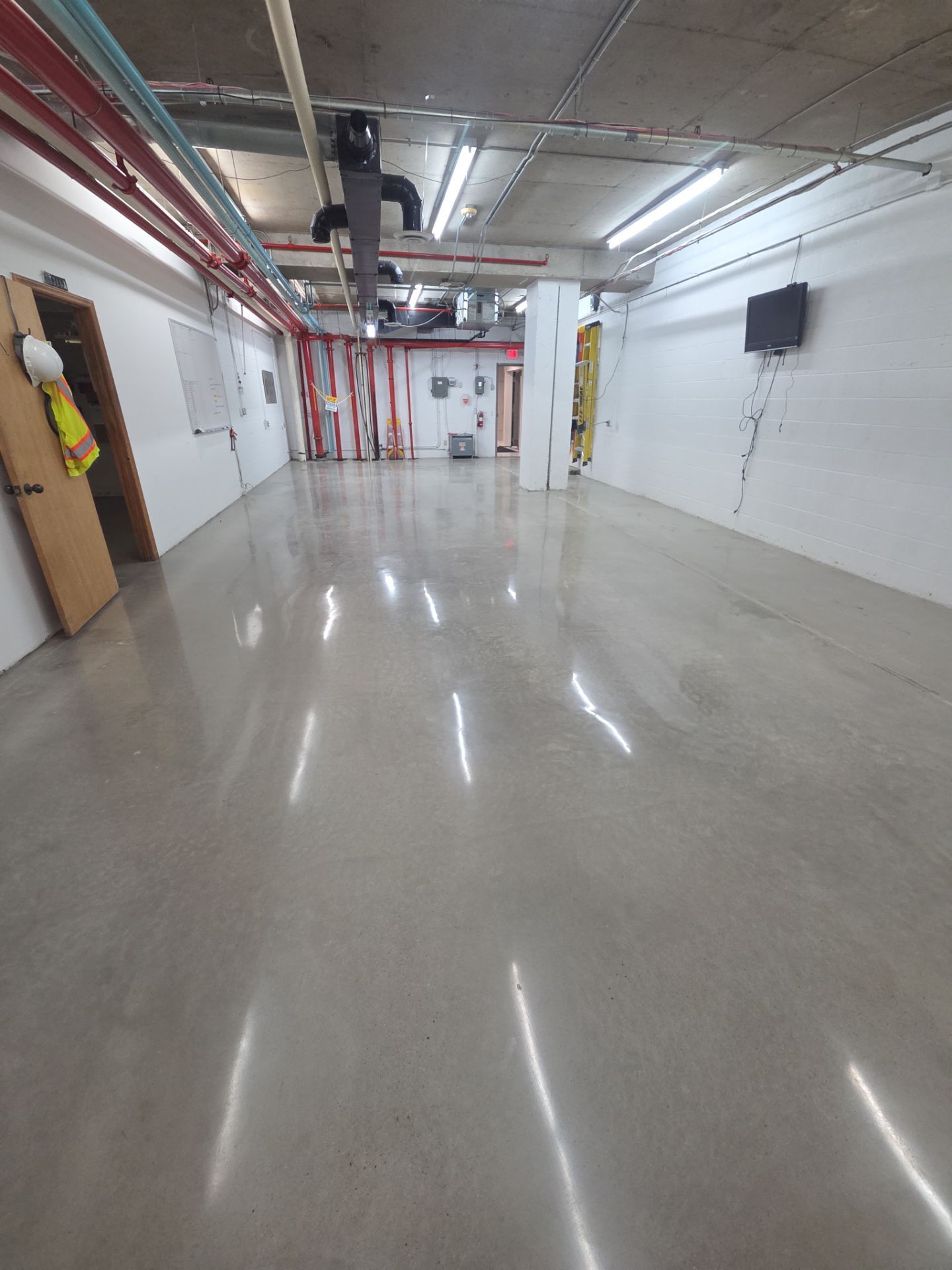
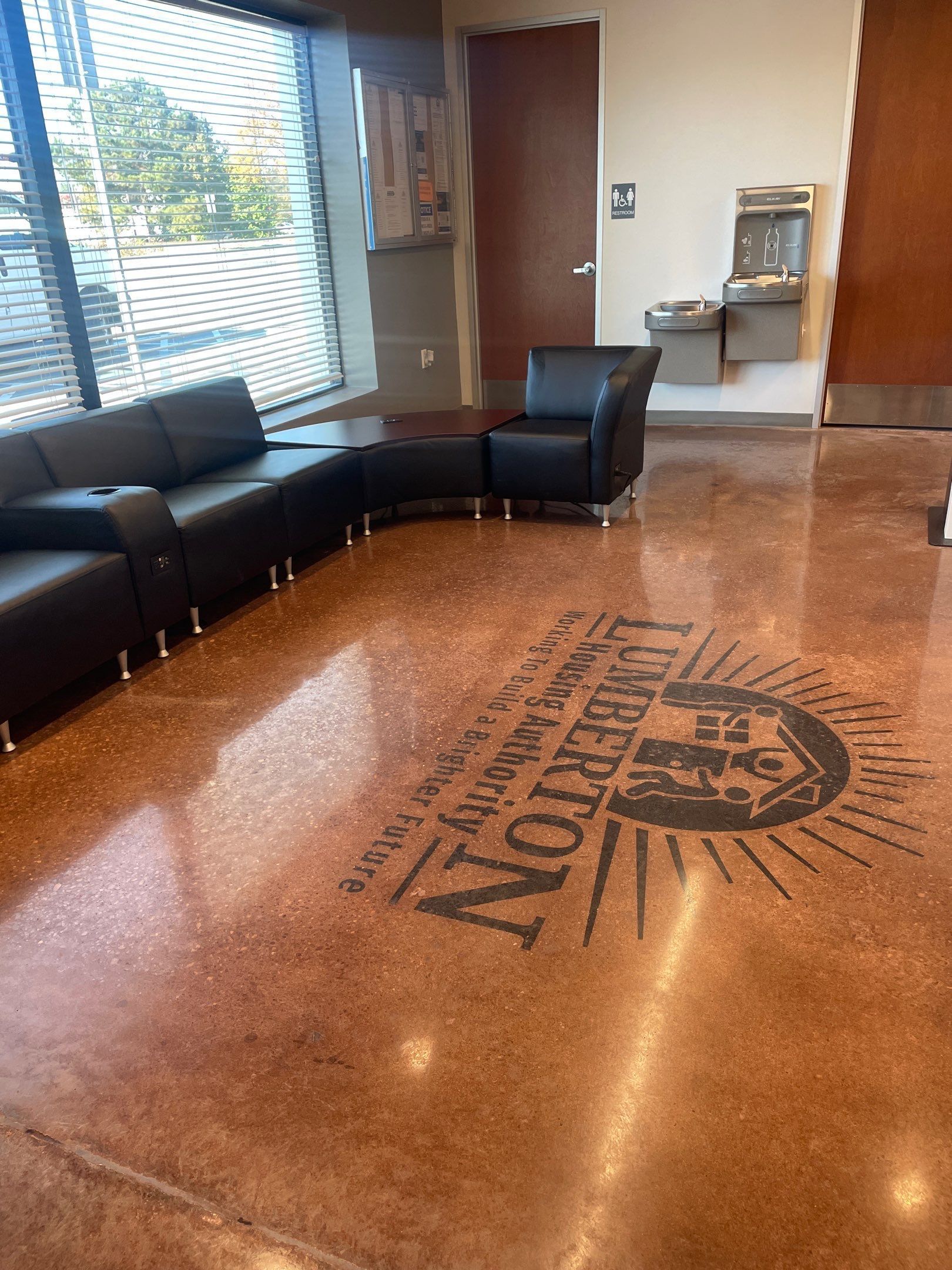
Project: Loc Doc
Location: Charlotte, NC
Client Type: Commercial Service Facility
Project Summary: Custom Coatings polished approximately 2,936 square feet of concrete flooring, transforming the existing surface into a durable, high-gloss finish with minimal maintenance requirements. The project included removal of the existing flooring and rubber base, multi-stage diamond grinding and polishing, application of a concrete densifier and protective guard sealer, and installation of new rubber base. The completed floor provides long-lasting durability, improved appearance, and enhanced resistance to daily wear in a commercial environment.
FAQ's
What does concrete polishing cost?
It depends on the floor, but a useful ballpark for a space of 500 square feet or more is $3.50 to $4.50 per square foot. Bigger floors generally cost less per foot. What moves the number is the condition of the existing concrete, any coatings already on it that have to come off, access to the space, and whether you're adding dye. We'll give you a concrete figure after seeing the slab.
How slippery is a polished concrete floor?
The honest answer: polished concrete is a great fit for dry interior spaces, and a poor one for areas that are regularly wet. If that's your situation, we'll point you toward a textured or non-slip system instead.
What will my floor actually look like?
Concrete is like a snowflake: every slab is different, and grinding reveals the aggregate (the small stones mixed into the concrete) in a "salt and pepper" pattern that's unique to your floor, closer to marble or granite than to a uniform tile. We can show you examples to set the direction, but we can't guarantee an exact result. If you need a precise, uniform look, polishing probably isn't your best option.
What are the little dark specks in a polished floor?
Aggregate, the actual stones mixed into your concrete. When a slab is poured, most of it sinks, but the more we grind during polishing, the more of it we expose. The depth we grind to is part of how we control the final look. Those specks aren't flaws; they're a big part of what makes a polished floor one of a kind.