
Renovating Worn School Floors Over Summer Break Without Replacing Them
Last Updated: August 14, 2026
Worn VCT, linoleum, and rubber school floors don't have to be replaced to be fixed. A wear-layer renovation restores and protects the floor you already have. No demolition, no equipment removal, and it's walkable before students return. Most districts spend about the same per year on strip-and-wax as they would on a one-time renovation that lasts three or more years. For a typical 10,000-square-foot wing, renovation runs roughly $3 to $6 per square foot over 1 to 2 days. Full replacement runs $4 to $12 per square foot and 5 to 6 days of downtime. We'll walk you through why, and where this approach doesn't apply, because we'd rather tell you that up front than after you've signed a contract.
Why Is It So Hard to Fix School Floors Without Disrupting the School Year?
Every facilities director runs the same calendar math. A 10 to 12-week summer window. Multiple buildings. A maintenance team already stretched across HVAC checks, painting, and a backlog of deferred work orders. Floor projects compete for the same narrow window as everything else, and floor maintenance in cafeterias, hallways, and gyms can consume weeks of that time. Additional waxing and touch-up work may then continue throughout the school year.
The strip-and-wax cycle is the real cost driver, and it's worth understanding why. Strip the old finish. Apply three to five coats of wax, with drying time between each. Buff regularly to maintain shine. Maintenance frequency varies by district. Some schools complete a full strip-and-wax cycle annually and add one or more wax applications during the year, while higher-traffic areas may require more frequent attention. The labor, chemicals, equipment, and downtime add up to a recurring expense that never actually improves the floor. It just resets the clock until the next strip.
What's the Alternative to Replacing Worn School Floors?
There's more chemistry in a floor coating than most people realize, and understanding it is exactly what helps a facilities director make the right call instead of the easy one. Floor renovation, sometimes called a wear-layer renovation, restores and protects the resilient flooring a school already has instead of tearing it out. The existing VCT, linoleum, or rubber flooring is mechanically prepared (no chemical stripping, no grinding) and sealed with a high-performance polyurethane wear layer. The result is a surface that's significantly harder than wax, resists yellowing, and is engineered to be recoated rather than replaced when it eventually wears.
This is built for many of the resilient floor types schools already have, including VCT, sheet vinyl, linoleum, and compatible rubber flooring. It is not a concrete-resurfacing product. It's purpose-built for the resilient floors sitting under decades of wax buildup in nearly every school hallway and cafeteria in the country.
What Does the Renovation Process Actually Involve?
We don't give vague answers here. You should know exactly what's happening to your floor and why. The process happens in three stages, all completed on site:
- Contamination removal: Old wax, coatings, and residue are removed without harsh chemical stripping.
- Mechanical surface prep: Light mechanical sanding creates the surface profile the wear layer needs to bond, with no dust-heavy grinding.
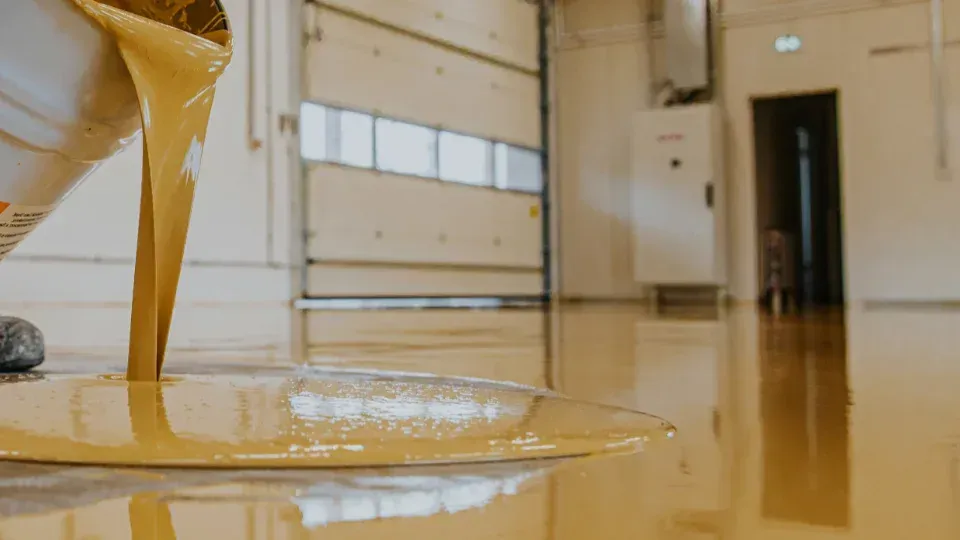
- Polyurethane wear-layer application: One to two coats are rolled on, depending on substrate and traffic. A zone is typically walkable within 24 hours.
No demolition. No equipment removal. That means maintenance teams can sequence buildings and wings without holding up the rest of the summer task list. A typical zone takes 1 to 2 days from prep to topcoat, fast enough to fit alongside everything else competing for that window.

How Much Does Floor Renovation Cost Compared to Strip-and-Wax or Replacement?
The most useful comparison isn't renovation versus nothing. It's renovation versus what your district is already spending. A typical school's annual strip-and-wax cost is roughly equal to the one-time cost of a wear-layer renovation that then lasts three or more years before its first recoat. Year one costs about what you're already paying. After the initial renovation, facilities can avoid much of the recurring labor, chemical use, and downtime associated with repeated strip-and-wax cycles for several years before recoating is needed.
Custom Coatings modeled a school with approximately 35,000 square feet of VCT that completed one full strip-and-wax cycle annually and added another wax application later in the year. Compared with installing a floor-renovation coating system, the model projected more than $400,000 in savings over ten years. Actual savings depend on labor, materials, maintenance frequency, and project conditions.
Where a district is weighing full replacement instead, the comparison sharpens further. Verify current local pricing before budgeting, since every project is different, but typical ranges are:
- Replacement: roughly $4 to $12 per square foot, 5 to 6 days of downtime per zone, plus equipment removal and landfill disposal.
- Renovation: roughly $3 to $6 per square foot, 1 to 2 days, no equipment removal, near-zero waste.
On a 10,000-square-foot wing, that gap is tens of thousands of dollars and several extra operational days. Numbers that matter when a board is comparing a capital request against the routine maintenance line.
Renovation vs. Replacement: A Side-by-Side Comparison

Where Floor Renovation Isn't the Right Fit
We don't leave a job until it's right, and that starts with telling you honestly whether this is the right job in the first place. This approach is built for resilient flooring that's worn but structurally sound, like VCT, linoleum, rubber, and sheet vinyl. It isn't designed for outdoor surfaces, areas with active moisture intrusion, or carpet, and it won't fix a subfloor that's already failing underneath. On VCT and tile floors with visible seam lines or grout patterns, a clear wear layer alone will make the floor smoother and more uniform, but it won't make those lines fully disappear in natural light. Even with the grid still visible, the surface is sealed tight, so it cleans more easily and holds its look far longer than wax. If you want the lines visually gone, we'd recommend a color or chip-broadcast finish instead, which breaks up the grid pattern rather than just sealing over it.
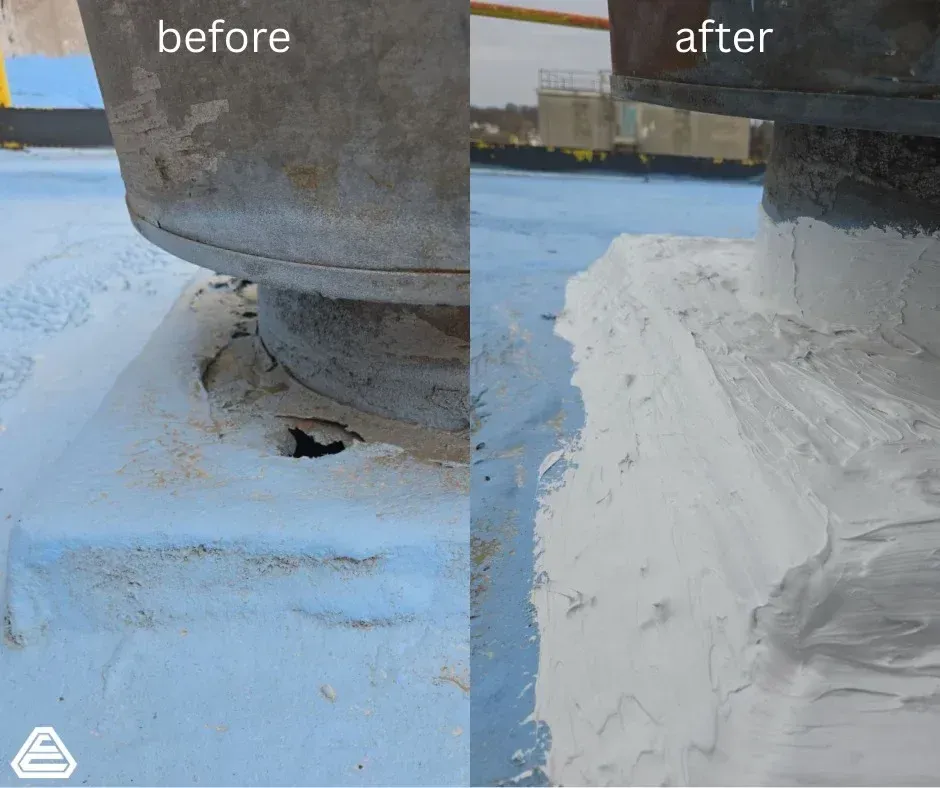
Real Results: A School Floor Renovation Before & After
A commercial kitchen floor coated at Johnson C Smith University, before and after.

Frequently Asked Questions
Q. How long does a school floor renovation take?
Most zones are done in 1 to 2 days and walkable within 24 hours, fast enough to fit inside a summer schedule alongside everything else on your list.
Q. Can this system be used on a gym floor?
Potentially, depending on the existing flooring material and the manufacturer’s specifications. Custom Coatings has not yet completed a gym-floor project using this particular renovation system, so the substrate, traffic demands, and product compatibility would need to be evaluated before recommending it.
Q.Do we have to do every building at once?
No. Because there's no equipment removal or demolition, we can sequence buildings and wings over multiple summers, or even split the work across a single summer, without disrupting the rest of your maintenance calendar.
About Custom Coatings Inc.
Custom Coatings has been North Carolina's commercial coatings experts since 1991, working across the Southeast as what we call the Educated Coatings Contractor. There's a lot of technology in a single gallon of paint, or a single coat of wear layer, and we believe understanding it is what lets a school district make the right call, whether they end up working with us or not. If your district is weighing a strip-and-wax cycle that never ends against a replacement project the budget can't absorb, a no-cost floor assessment is the easiest way to see where renovation fits. Not ready for a full project? A walkthrough can still help you think it through before your next budget cycle.

Joe Brindle
Joe Brindle is the President and co-founder of Custom Coatings Inc., bringing more than 30 years of experience in commercial and industrial painting and coatings. Since founding the company in 1991, Joe has built extensive hands-on knowledge of coating systems, surface preparation, estimating, project planning, and product selection for commercial and industrial facilities throughout the Southeast.

SHARE THIS ARTICLE
OUR RECENT BLOG ARTICLES