My Roof Is 10 Years Old and Isn't Leaking. Does It Need to Be Replaced?
Last Updated: October 9, 2026
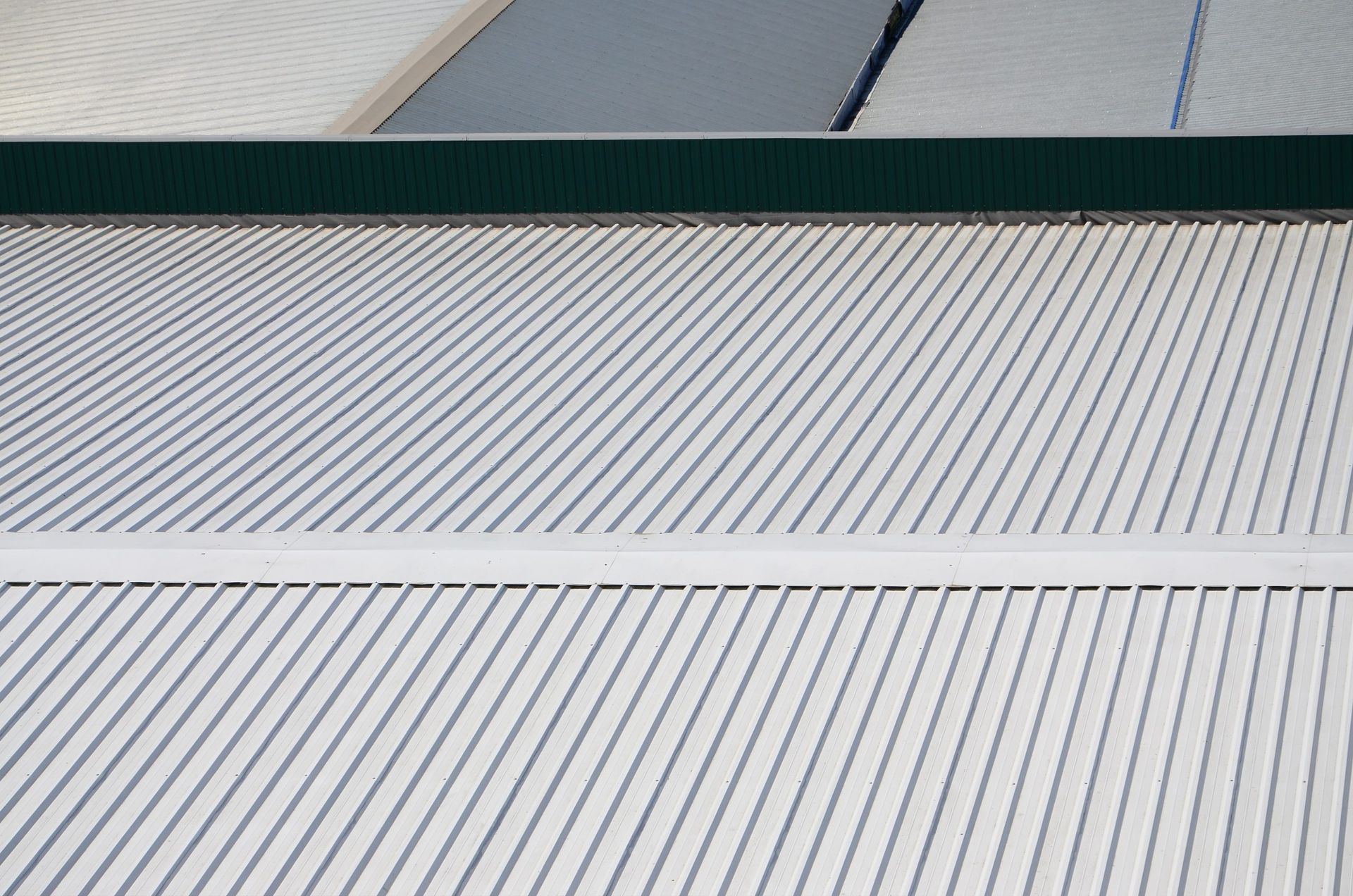
Short Answer: Probably not. A commercial roof that's 10 years old and still performing well doesn't automatically need to be replaced simply because it reached a certain birthday. Age is only one piece of the puzzle. The real question is whether the roof is still structurally sound and capable of protecting your building. In many cases, a quality roof coating or a little preventative maintenance can add years of life and save a substantial amount of money.
The moment a commercial roof hits 10, 15, or 20 years old, people start talking about replacing it as if it's suddenly eligible for retirement benefits. Building owners hear comments like, "Well, it's about that age," and before long they're budgeting for a six-figure roof replacement.
Here's the problem: roofs don't expire like milk. Some roofs are worn out long before their expected lifespan. Others still have plenty of life left after decades of service. The only way to know is to evaluate the roof itself, not just the calendar.
Age Doesn't Tell the Whole Story
Imagine buying a pickup truck. One truck has 250,000 hard miles hauling construction equipment every day. Another has 90,000 highway miles driven mostly on weekends. They're the same age, but they're in completely different condition. Commercial roofs work the same way. A roof's lifespan depends on factors like:
- How well it was installed
- The quality of the original materials
- Sun exposure and weather
- Drainage and ponding water
- Routine maintenance (or lack of it)
- Repairs performed over the years
Two roofs installed on the same day can end up in very different conditions ten years later.
What Actually Matters?
When evaluating whether a roof should be replaced, professionals look for the condition of the roofing system. A roof may still be an excellent candidate for restoration if it has:
- No widespread leaks
- Structurally sound insulation and decking
- Limited damage that's localized rather than extensive
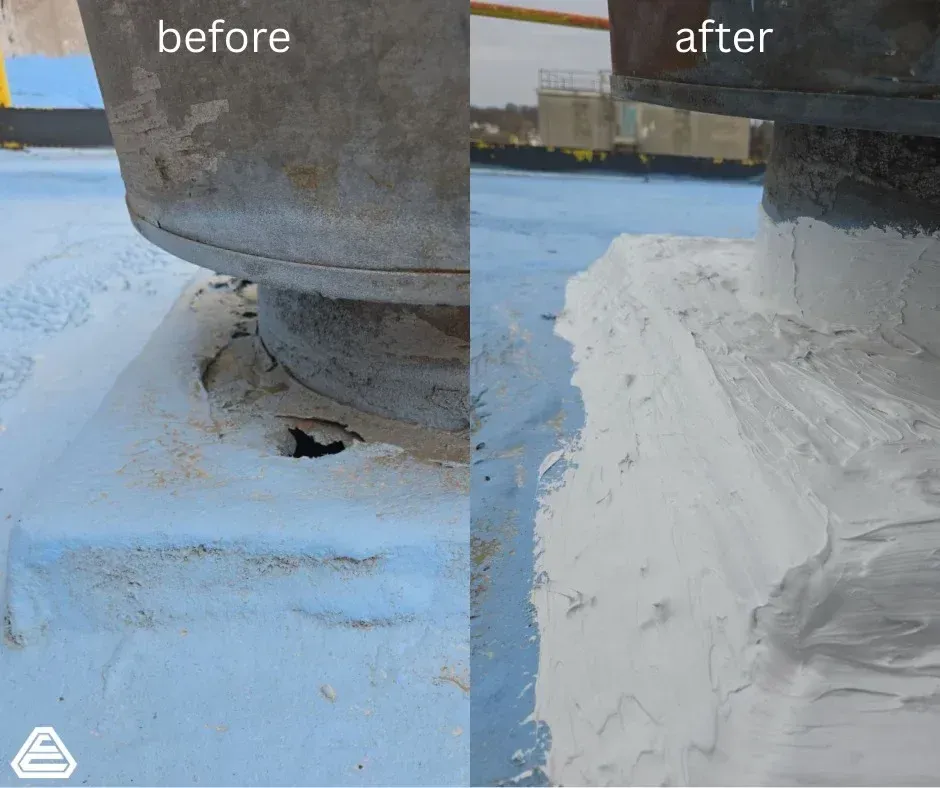
- Seams and flashings that can be repaired
- A membrane that's weathered but still intact
In those situations, replacing the entire roof may be unnecessary. On the other hand, if water has saturated insulation throughout the building, structural components are failing, or the membrane has deteriorated beyond repair, replacement may truly be the best option. That's why an honest inspection comes before any recommendation.
When a Roof Coating Makes More Sense
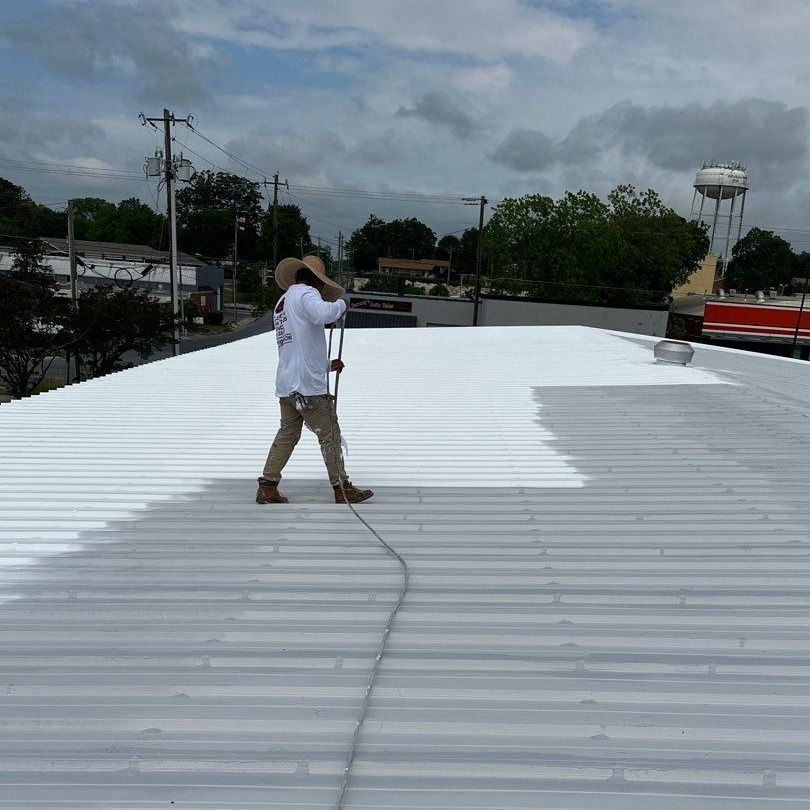
Many commercial roofs don't need to start over. They simply need a new protective layer (you can learn more about that here). Roof coatings are designed to restore and protect an existing roofing system that's still structurally sound. Instead of tearing everything off and sending tons of material to a landfill, a coating creates a seamless protective membrane over the existing roof.
That can provide benefits like:
Extended Service Life
A quality coating can significantly extend the usable life of an existing roof, delaying replacement for many years.
Lower Overall Cost
Restoration generally costs substantially less than a full roof replacement because the existing roofing system remains in place.
Less Disruption
Since large portions of the roof aren't being removed, building operations often continue with far less interruption.
Improved Energy Performance
Many reflective roof coatings reduce heat absorption, helping buildings stay cooler and potentially lowering cooling costs during warmer months.
Not every roof qualifies, but many more qualify than building owners realize.

The Most Expensive Roof Is the One You Didn't Need
One of the biggest misconceptions in commercial roofing is that replacement is automatically the safest recommendation. Sometimes it is. Sometimes it absolutely isn't. A trustworthy contractor should be willing to tell you when your roof doesn't need replacing, even if that means recommending a smaller project or simply continuing to monitor the roof for a few more years. Ironically, those conversations often build far more trust than selling a replacement every time.
After all, if someone is willing to talk you
out of spending hundreds of thousands of dollars today, you'll probably remember them when you eventually do need help.
So... Should You Replace Your 10-Year-Old Roof?
Maybe. But maybe not. The number of birthdays your roof has celebrated tells you surprisingly little. Its condition tells you almost everything. Before committing to a major replacement, have the roof evaluated by someone who's willing to explain what they're seeing, discuss all of your options, and recommend the solution that actually fits the condition of the roof, not just its age.
Frequently Asked Questions
Q: How long should a commercial roof last?
A: It depends on the roofing system, installation quality, climate, maintenance, and exposure. Some commercial roofs last 20 years or more, while others require significant repairs much sooner.
Q: Can a roof coating stop leaks?
A: Roof coatings can address certain leaks when they're part of a properly repaired roofing system. However, coatings shouldn't be used to cover up major structural issues or widespread water damage.
Q: How do I know if my roof qualifies for a coating?
A: A professional inspection can determine whether the roof is structurally sound, whether moisture has infiltrated the system, and whether restoration is a practical option.
Q: Will a roof coating delay replacement forever?
A: Technically, if a roof is coated, maintained, and recoated at a certain interval, that roof may be the last one that ever needs to be installed.
Q: Is replacing an older roof ever the right decision?
A: Absolutely. If the roof has extensive moisture intrusion, failing insulation, structural damage, or widespread deterioration, replacement may be the most cost-effective long-term solution.

Joe Brindle
Joe Brindle is the President and co-founder of Custom Coatings Inc., bringing more than 30 years of experience in commercial and industrial painting and coatings. Since founding the company in 1991, Joe has built extensive hands-on knowledge of coating systems, surface preparation, estimating, project planning, and product selection for commercial and industrial facilities throughout the Southeast.

SHARE THIS ARTICLE
OUR RECENT BLOG ARTICLES